
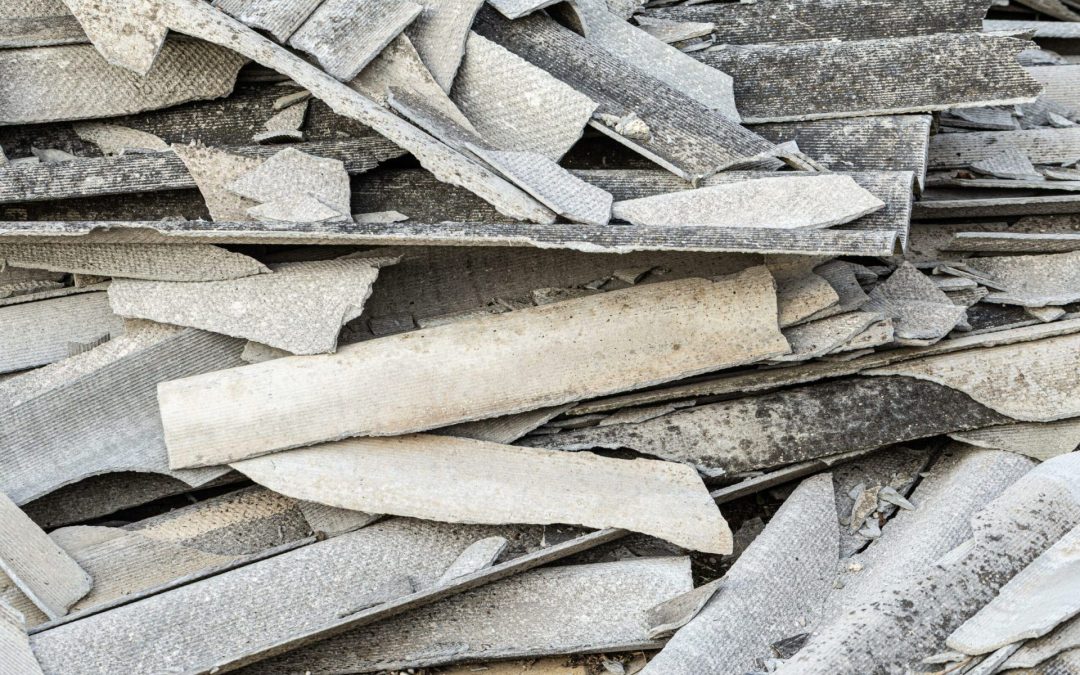
If you own, manage or work on a property built before 2000, there’s a fair chance you’ll come across asbestos at some point. Knowing how to get rid of asbestos correctly isn’t just good practice; it’s a legal obligation. This guide walks through what UK law says about asbestos disposal, the practical steps involved, and why professional support matters so much when it comes to keeping people and premises safe.
What Counts as Asbestos Waste in the UK?
Any material containing 0.1% or more asbestos is legally classed as hazardous waste once it’s removed from a building. This includes obvious sources such as roof sheets, pipe lagging and insulation boards, but also less obvious items like textured coatings, floor tiles and certain cement products. Once these materials are disturbed or taken out of a building, they fall under the Hazardous Waste (England and Wales) Regulations 2005, which set out strict rules for how they must be handled, transported and disposed of.
In short: if a material contains more than trace amounts of asbestos, it’s hazardous waste the moment it comes out of the building, and the law treats it accordingly.
Is It Legal to Dispose of Asbestos Yourself?
In very limited circumstances, homeowners can remove and dispose of small amounts of certain lower-risk asbestos materials themselves, such as cement products in good condition. However, this is rarely straightforward. You’d need to source UN-approved packaging, find a licensed site willing to accept the waste, and complete the correct paperwork, all while following strict handling guidance to avoid releasing fibres. For commercial premises, higher-risk materials, or anything beyond a small, stable item, asbestos removal should always be carried out by a licensed contractor rather than attempted independently.
In short: DIY disposal is technically possible for very limited cases, but the practical and legal hurdles usually make professional removal the safer, simpler route.
What Are the Legal Requirements for Asbestos Disposal?
Once asbestos waste has been generated, several legal requirements come into play:
- Packaging – Asbestos waste must be double-wrapped in UN-approved, clearly labelled packaging designed to prevent fibre release during handling and transport.
- Licensed carriers – Waste must be collected and transported by a registered hazardous waste carrier, such as ourselves, who is authorised by the Environment Agency to move this type of material.
- Authorised disposal sites – Asbestos can only be deposited at landfill sites specifically licensed to accept hazardous waste, not standard household or commercial tips.
- Documentation – Every movement of asbestos waste must be recorded, tracked and retained as proof of compliant disposal.
These requirements sit alongside the Control of Asbestos Regulations 2012, which govern how asbestos is managed, surveyed and worked with more broadly.
In short: compliant disposal means UN-approved packaging, a licensed carrier, an authorised site, and paperwork to prove it every step of the way.
How Is Asbestos Waste Transported and Documented?
Every load of asbestos waste must travel with a Hazardous Waste Consignment Note, a legal document that records the waste type, quantity, producer, carrier and receiving site. The government’s consignment note guidance explains that each party in the chain, from the person who produced the waste through to the disposal site, must complete their section and retain a copy for at least three years.
It’s also worth knowing that waste record-keeping in England is changing. From October 2026, permitted waste receiving sites will be legally required to log hazardous waste movements through the Environment Agency’s new Digital Waste Tracking service, gradually replacing the paper-based system. If you’re arranging asbestos waste disposal for a commercial project, it’s worth checking that your contractor is prepared for this shift.
In short: consignment notes create a legal paper trail for every load of asbestos waste, and from October 2026 this record-keeping is moving to a digital system.
Where Can Asbestos Waste Be Disposed Of?
Asbestos cannot be placed in a standard skip, household bin or general commercial waste stream under any circumstances. It must go to a landfill site holding a specific permit to accept hazardous waste, and larger commercial loads are often taken to sites with dedicated hazardous waste cells. Some local Household Waste Recycling Centres will accept small, pre-packaged domestic quantities, but availability varies considerably by council, and quantities are usually capped. For anything beyond a small domestic job, working with a licensed asbestos waste disposal company ensures your waste reaches an appropriate site without the guesswork.
In short: asbestos waste can only go to landfill sites licensed for hazardous waste, not general tips or standard skips.
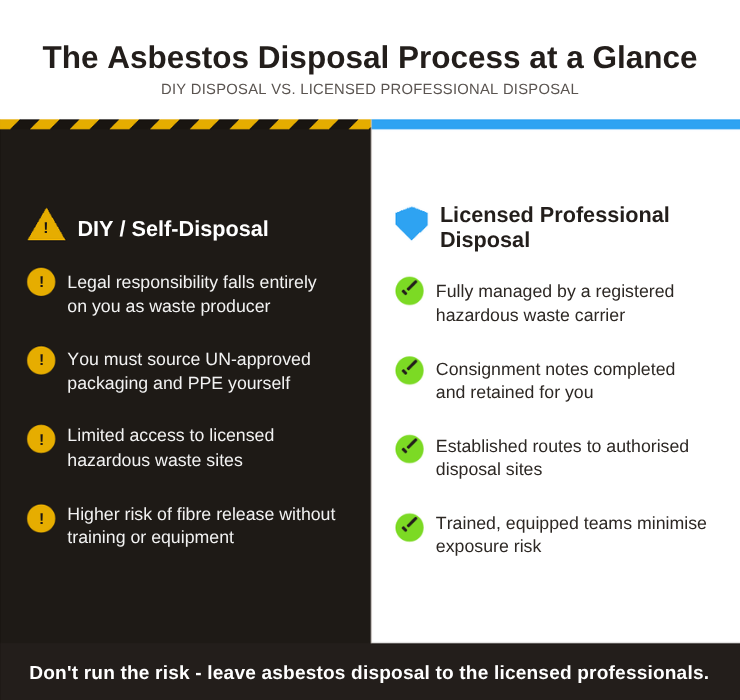
In short: the visual makes the contrast immediate – DIY disposal puts the legal and safety burden on you, while professional disposal takes care of compliance from start to finish.
What Happens If Asbestos Is Disposed of Incorrectly?
Illegally dumping or mishandling asbestos waste is a serious offence. The Environment Agency has the power to issue substantial fines, and in serious cases, prosecution can follow, alongside the far greater risk of exposing yourself, employees or the public to airborne fibres. For businesses, incorrect disposal can also invalidate insurance and cause significant reputational damage. If you’re managing a commercial property, an up-to-date asbestos survey is the best starting point for understanding exactly what you’re dealing with before any waste is generated.
In short: incorrect disposal carries real legal, financial and health consequences, making professional guidance well worth the investment.
Frequently Asked Questions
Can I put asbestos in a normal skip?
No. Asbestos must never be mixed with general waste or placed in a standard skip, as this risks releasing fibres and breaches hazardous waste regulations.
How much does asbestos waste disposal cost?
Costs vary depending on the type and quantity of material, packaging requirements and transport distance to a licensed site. A licensed contractor can provide a clear, itemised quote.
Do I need a licence to dispose of asbestos myself?
You don’t need a personal licence for very small, low-risk domestic quantities, but you do need to use a registered carrier for transport and a licensed site for disposal, which is why most people choose a professional service.
How long should I keep my consignment note?
Consignment notes should be retained for at least three years as proof of compliant disposal, should the Environment Agency ever request evidence.
Get in Touch
If you need to arrange safe, fully compliant asbestos waste disposal, we’re here to help. As a licensed hazardous waste carrier serving Dorset, Somerset, Hampshire, Wiltshire and Southampton, we handle everything from packaging and transport to paperwork and disposal at an authorised site. Contact us today for a free, no-obligation quote.