
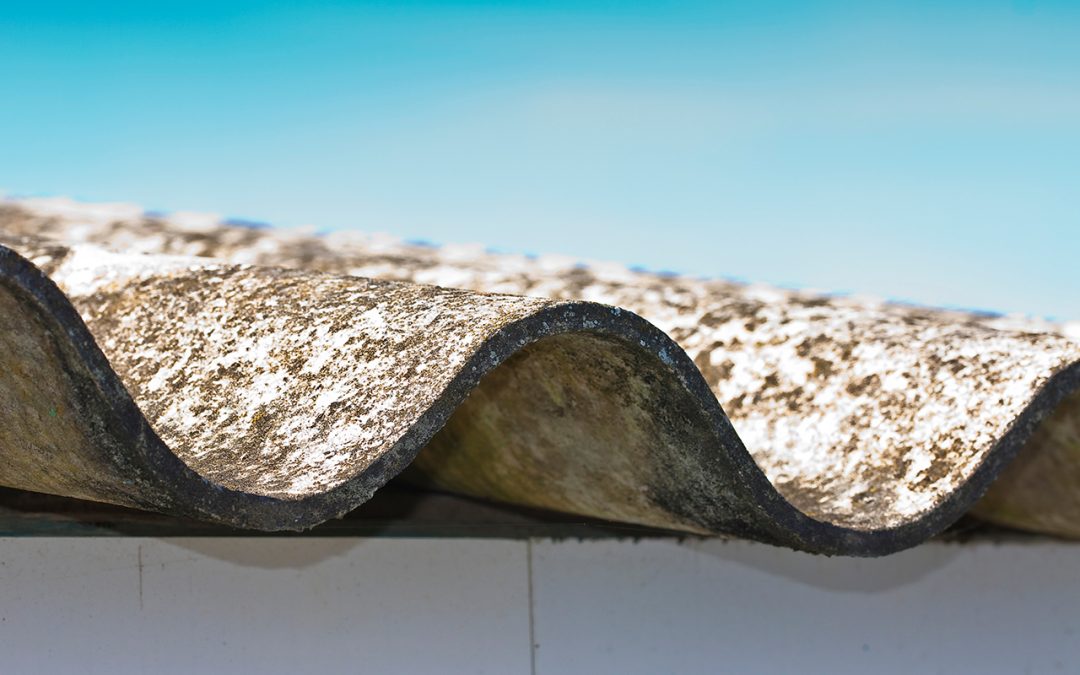
Managing and disposing of asbestos safely remains one of the UK’s biggest challenges in 2026. Bear in mind, asbestos was banned in 1999, and many buildings, such as schools, hospitals and homes, still contain asbestos-containing materials (ACMs) to this day. As many as twenty-two million homes were built before 2000, meaning asbestos is far more common than people realise. When it comes to duty holders, landlords and property managers, one question keeps appearing: “Is asbestos encapsulation enough, or should I remove it completely?” At Evans Asbestos, we have an expert team to carry out a range of services, including asbestos encapsulation.
What is Asbestos Encapsulation?
Asbestos encapsulation is a process that involves sealing asbestos-containing materials with a protective coating, wrap or rigid barrier. This prevents fibres from becoming airborne and significantly reduces the risk of exposure. Common asbestos sealing systems include:
- penetrating encapsulants, which soak into ACMs
- bridging encapsulants, which form a durable surface membrane
- rigid barriers, such as cladding, boarding or enclosures
Encapsulation does not remove asbestos; it simply makes it safe to remain in place. Our professional asbestos contractors will need to survey the material so that we can tell you whether we can encapsulate it or whether it will need to be removed altogether.
Step-by-Step: How Asbestos Encapsulation Works
Encapsulation must always be carried out by competent, suitably qualified contractors, and where the work is higher risk, by an HSE-licensed contractor. Unlicensed work puts people at risk and may constitute a criminal offence.
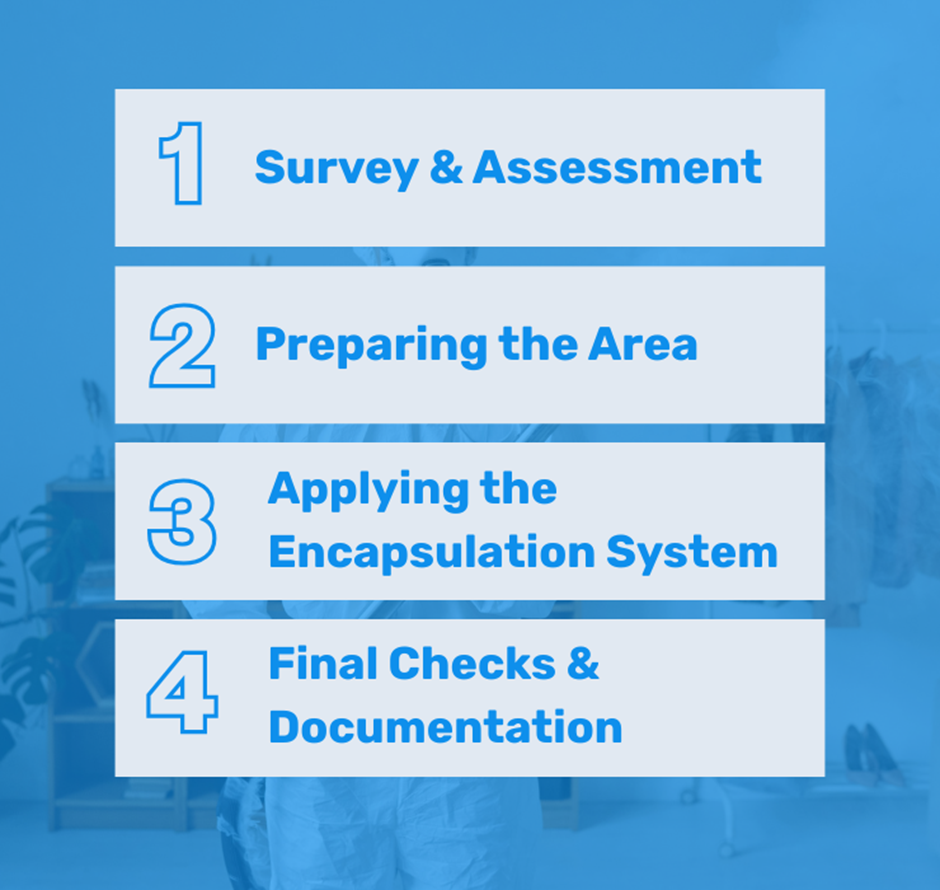
- Survey & Assessment: A qualified surveyor will check, identify and confirm whether encapsulation is the safest option.
- Preparing the Area: Loose dust is safely removed, and minor defects are repaired to ensure the ACM is stable enough to encapsulate.
- Applying the Encapsulation System: Depending on the material, specialists use liquid coatings, fibre-binding sealants, wraps, cladding or rigid panels to create a durable protective barrier.
- Final Checks & Documentation: The encapsulated area is inspected, recorded and added to the asbestos management plan for future monitoring.
What the UK Law Requires
Asbestos encapsulation falls under the Control of Asbestos Regulations 2012. Duty holders have to ensure that all ACMs are risk-assessed, identified and safely managed. Failure to comply can result in prosecution, imprisonment or enforcement notices. Key legal requirements include the following:
- Licensed contractors for high-risk work
- Risk assessments before any work begins
- 14-day HSE notification (where applicable)
- Correct PPE and RPE for workers
- Air monitoring during and after works
- Use of approved encapsulation materials
- Clear warning signage
- Accurate documentation
- Regular re-inspection
- A formal asbestos management plan
When Encapsulation Is the Right Choice
Encapsulation can be a safe, cost-effective alternative to full asbestos removal, but only in the right circumstances. Understanding when it is suitable, and when it isn’t, is key to managing asbestos responsibly and keeping your premises compliant.
When It’s Suitable
Encapsulation is most effective when the asbestos-containing material is in good condition. If the ACM is stable, undamaged and not friable, applying a specialist sealant prevents deterioration and stops fibres from being released, allowing the material to remain safely in place. It is particularly well-suited to areas where disturbance is unlikely, such as loft spaces, service risers, plant rooms, sealed voids and other low-traffic environments, where the material can stay safely encapsulated for decades.
It is also a practical option when budgets or timescales are tight. Encapsulation is quicker, cheaper and far less disruptive than full removal, with no need for extensive containment, demolition, waste disposal or reinstatement. In some cases, it is the safer option too, as removing asbestos temporarily disturbs the material, whereas encapsulation avoids that disturbance altogether and the immediate risk that can come with it.
Finally, encapsulation works well as part of a long-term asbestos management strategy. With regular inspections, it remains safe and compliant for many years, making it an ideal solution for organisations with planned maintenance cycles.
When It’s Not Suitable
Encapsulation is not the right approach in every situation. It should not be used where the material is damaged, friable or deteriorating, as water-damaged, crumbling or flaky asbestos may already have loose fibres that sealing cannot safely contain. It is also unsuitable for areas due to be renovated soon, where encapsulation only delays the inevitable removal and can complicate future works.
Equally, it is a poor choice anywhere the ACM may be knocked, cut or abraded. High-traffic areas, accessible ceiling voids and environments subject to vibration or impact all carry too great a risk of disturbance for encapsulation to be reliable. Finally, removal may simply be required by regulation or by insurers, with some projects, such as large refurbishments, commercial lending arrangements or certain industrial standards, mandating that asbestos is removed rather than sealed.
How Long Does Encapsulation Last?
With the correct practice and environment, asbestos encapsulation can typically last anywhere between 20 and 30 years. The condition of the underlying ACM is fundamental, as is the type of encapsulant used, whether penetrating or bridging, rigid or flexible, since each performs differently depending on the situation. Environmental conditions also play a significant role, with UV exposure, moisture and fluctuating temperatures all affecting how well the seal holds over time, as can mechanical wear or vibration in the area.
Just as important are the quality of the surface preparation and application, and the level of ongoing monitoring and maintenance. Even a well-chosen encapsulant will underperform if poorly applied or left unchecked. For this reason, encapsulated areas must always be included in the building’s asbestos management plan and re-inspected regularly to ensure they remain safe and compliant.
What is Best? Encapsulation or Removal?
Neither option is inherently better; the right choice depends on the type and condition of the asbestos, the likelihood of disturbance, any renovation or demolition plans, regulatory requirements, and your budget and timescales. Encapsulation is best for stable, low-risk materials, while removal is best for damaged, friable or high-risk materials.
A competent, HSE-licensed professional must make this decision, never a building owner or contractor without specialist qualifications. If you need expert guidance on asbestos encapsulation or removal across Dorset, Wiltshire and beyond, get in touch with our expert team today on 01202 402391 for a free, no-obligation quote.
Frequently Asked Questions
Is encapsulated asbestos safe to leave in place?
Yes. Once asbestos-containing materials have been properly sealed, the fibres are locked in and cannot become airborne, so they pose no risk while the encapsulation remains intact. The key is that the material stays undisturbed and is monitored over time, which is why encapsulated areas are recorded in your asbestos management plan and re-inspected regularly.
Can I encapsulate asbestos myself?
No. Even though encapsulation avoids the disturbance that removal involves, preparing and sealing the material still carries risk and must be done correctly to be compliant. The work should always be carried out by competent, suitably qualified contractors, and higher-risk materials require an HSE-licensed contractor. Attempting it yourself could put you and others at risk and may breach the Control of Asbestos Regulations 2012.
How often does encapsulated asbestos need to be inspected?
Encapsulated materials should be re-inspected at regular intervals as part of your ongoing asbestos management plan, typically at least once a year, and sooner if the area is altered or there is any sign of damage. Regular checks ensure the seal remains intact and that the material is still safe to leave in place.
Resources & Further Reading
Control of Asbestos Regulations 2012 – https://www.legislation.gov.uk/uksi/2012/632/contents